In modern home renovation, the selection of cabinetry has gradually shifted from a mindset of “as long as it works” to a comprehensive consideration of durability, aesthetics, eco-friendliness, and ease of maintenance. With advancements in materials technology, aluminum alloy cabinets have increasingly entered the public consciousness and are being adopted in an increasing number of residential renovation and commercial project applications. So, why are aluminum alloy cabinets becoming the preferred choice? What tangible advantages do they truly offer compared to traditional materials? The following analysis explores this in detail across various practical usage aspects.

Aluminum Alloy: Better Suited for Humid and Greasy Environments
The kitchen is one of the most frequently used and environmentally complex spaces in a home, constantly exposed to moisture, cooking fumes, and high temperatures. In such an environment, traditional wooden cabinets are prone to issues such as water absorption leading to swelling, deformation, or even mold growth—problems that are particularly pronounced in southern or coastal regions.
In contrast, aluminum alloy is inherently non-absorbent and does not undergo structural changes in response to humidity fluctuations, allowing it to maintain its stability even in persistently damp environments. This inherent material property fundamentally resolves the issue of cabinets being “vulnerable to water,” making them ideally suited for the unique demands of a kitchen space.
More Reliable Fire Resistance
Since kitchens involve open flames and high-temperature appliances, the fire resistance of cabinetry materials directly affects household safety. Traditional wooden materials not only burn easily at high temperatures but may also release harmful gases.
Aluminum alloy, being a metal material, is non-combustible; it does not burn under high-temperature conditions, nor does it generate toxic fumes. This characteristic gives aluminum cabinets a natural advantage in terms of safety, making them particularly suitable for homes or commercial kitchens where safety standards are a top priority.
Extended Service Life
In practical terms, cabinetry is not a product that is replaced frequently; therefore, durability is of paramount importance. Over time, wooden cabinets are prone to cracking, warping, and moisture-related damage, resulting in a typically limited service life.
Aluminum alloy cabinets, on the other hand, offer superior structural stability; they resist deformation, are impervious to insect infestation, and do not suffer performance degradation from environmental fluctuations. Under normal usage conditions, their service life can exceed twenty years—making them a more economically sound choice in the long run.
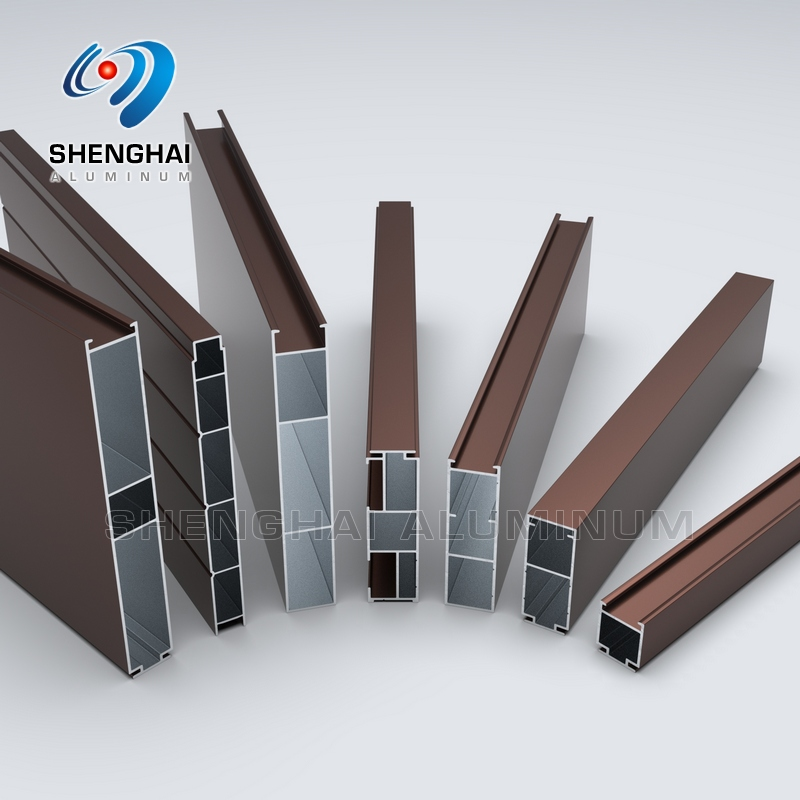
Outstanding Environmental Performance
In recent years, consumers have placed increasing emphasis on environmental issues within the home—particularly regarding formaldehyde emissions. The production of traditional cabinetry made from engineered wood panels often requires the extensive use of adhesives, which are a primary source of formaldehyde. Aluminum alloy cabinetry uses metal as its primary structural material and does not rely on adhesives for assembly; consequently, it effectively eliminates formaldehyde emissions. This represents a significant advantage for households with elderly members, young children, or individuals sensitive to air quality.
Simple Cleaning and Maintenance
Daily kitchen use inevitably leads to the accumulation of grease and grime; if cabinet surfaces are difficult to clean, maintenance costs can escalate significantly. Wooden cabinetry, once penetrated by oil stains, can be particularly challenging to restore.
In contrast, the surfaces of aluminum alloy cabinets are typically oxidized or spray-coated, endowing them with superior stain resistance. Grease does not easily adhere to these surfaces, and even if soiling occurs, it can be effortlessly removed with a simple wipe-down. This “low-maintenance” characteristic is especially valuable in today’s fast-paced modern lifestyle.

Flexible Design
As home decor trends constantly evolve, cabinetry must offer not only functionality but also a distinct aesthetic appeal. Structurally, aluminum alloy cabinetry lends itself readily to modular design; it can be flexibly customized to fit specific spatial dimensions while accommodating a wide array of functional combinations—such as drawer systems, corner storage solutions, and integrated LED lighting strips.
In terms of aesthetics, various surface treatment techniques allow aluminum alloy to mimic a diverse range of finishes—including wood grain, matte textures, and brushed metal effects—making it perfectly adaptable to a range of interior design styles, such as modern minimalist, “light luxury,” and industrial themes.
Adaptability to Challenging Environments
In specific environments—such as regions with high humidity or coastal cities—airborne salinity and moisture can corrode building materials. Wooden cabinetry is not only susceptible to moisture damage but also vulnerable to insect infestation.
Aluminum alloy contains no organic components and is therefore immune to insect damage; furthermore, through specialized surface treatments, it acquires excellent corrosion resistance. This ensures that the cabinetry maintains stable performance even in challenging environments, thereby reducing the frequency of future repairs and replacements.
Distinct Advantages in Commercial Projects
Beyond residential renovations, aluminum alloy cabinetry offers distinct advantages in commercial and engineering projects as well. For instance, in developments such as apartment complexes, hotels, and fully furnished residential units, material stability and consistency are paramount.
Aluminum alloy cabinetry enables standardized manufacturing processes, enabling tighter quality control. Moreover, it is highly resistant to damage during transportation and installation, which helps accelerate project timelines and mitigate post-completion service risks. For clients engaged in bulk purchasing, this represents a tangible and significant value proposition. Taken as a whole, the advantages of aluminum alloy cabinetry extend beyond isolated performance metrics; rather, they represent a holistic optimization across multiple dimensions—including water resistance, fire resistance, eco-friendliness, durability, and maintenance costs. Not only does this material resolve the numerous pain points associated with traditional cabinetry, but it also better aligns with the dual demands for quality and efficiency characteristic of modern households and commercial projects.
For the end user, choosing aluminum kitchen cabinet fundamentally represents an upgrade—a transition from furniture that is merely “functional” to furniture that remains ”reliably effective over the long term.” For businesses or project developers, this choice of material translates into more consistent quality performance and lower overall lifecycle costs.