How to Choose the Right Surface Finish to Make Aluminum Trim More Durable and Refined
In practical applications, aluminum trim (also known as decorative strips or edging) serves not only to finish edges and provide protection but also directly influences the overall aesthetic of a space. Many clients, when making a purchase, focus solely on dimensions and price while overlooking the critical factor of surface finishing.
In reality, the specific surface finishing process applied directly determines the aluminum trim’s durability, visual texture, and suitability for various environments. An incorrect choice can not only compromise the aesthetic outcome but may also lead to future maintenance issues.
As a professional manufacturer of aluminum trim, Shenghai Aluminum offers expert technical guidance to help you make the right choice.
Why Aluminum Trim Requires Surface Finishing
While aluminum itself possesses a certain degree of natural oxidation resistance, an untreated surface still presents significant drawbacks:
First, bare aluminum is prone to oxidation when exposed to air; over time, the surface may darken or even develop noticeable color variations. Second, aluminum has a relatively low surface hardness, making it highly susceptible to scratches during installation or daily use. Furthermore, in humid or outdoor environments, the material may be prone to corrosion.
Consequently, applying a surface finish effectively resolves these issues while delivering several key enhancements:
- Improved corrosion resistance, extending the product’s service life.
- Increased surface hardness, minimizing scratches and abrasions.
- Availability of a diverse range of colors and textures.
- Elevated overall decorative appeal and product quality.
Simply put, surface finishing is not merely an aesthetic requirement; it is a functional necessity.
Anodizing: The Most Common and Stable Choice
Among all available processes, anodizing is the most widely utilized method for decorative aluminum trim.
This process involves an electrochemical reaction that forms a dense, protective oxide film on the aluminum surface. This film not only bonds securely to the base material but also provides robust protection against external elements.
From a practical standpoint, anodizing offers several distinct advantages. First, it provides exceptional corrosion resistance, making it ideal for long-term use. Second, the color remains highly stable and resistant to fading. Additionally, the surface develops a refined metallic texture, lending the product a more premium, sophisticated appearance.
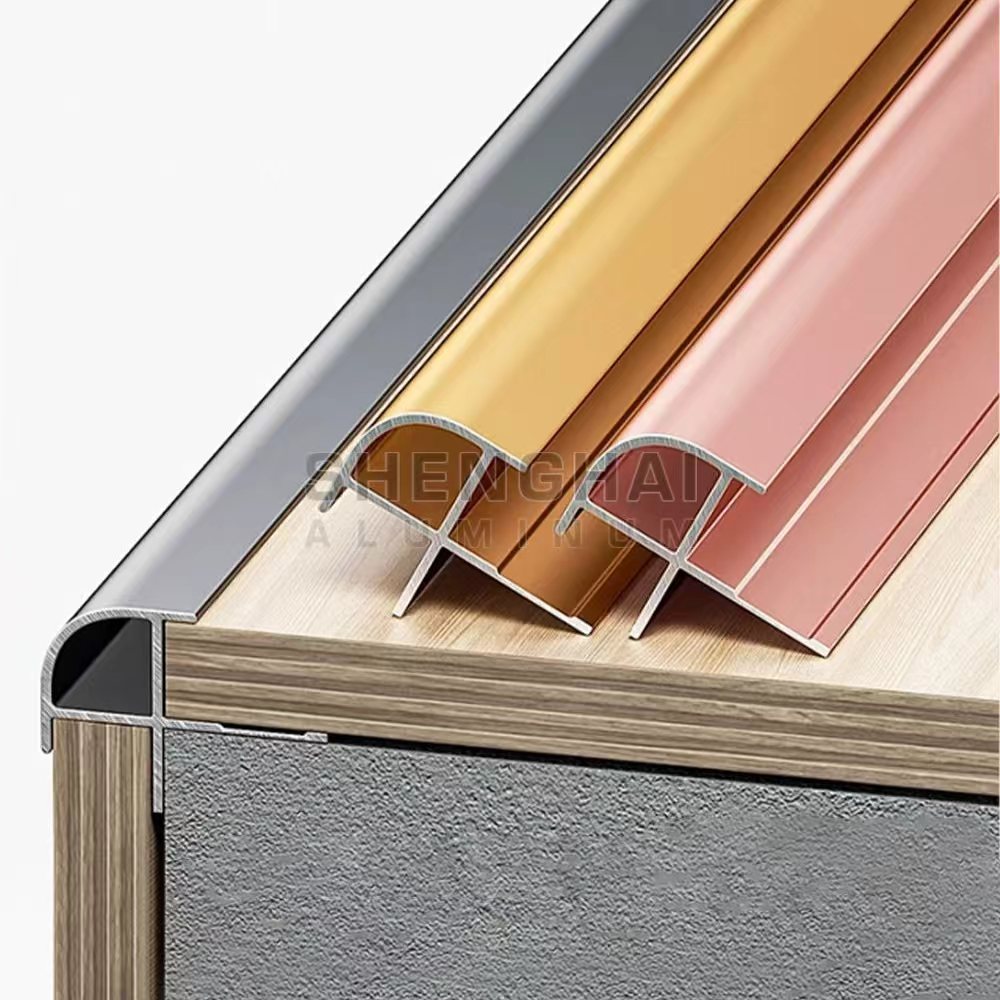
Common color options include silver, black, champagne, and bronze, all well-established and highly popular in the current market. In terms of application, anodizing is particularly well-suited for scenarios where both aesthetic texture and durability are paramount, such as tile trim strips, aluminum channels for LED lighting, and cabinet frames. If your clients prioritize long-term stability and a premium appearance, this process is typically the preferred choice.
Powder Coating: Rich Colors, High Cost-Effectiveness
If a project requires a wide range of color options while operating within a budget-sensitive framework, powder coating is a more practical solution.
This process utilizes electrostatic attraction to evenly deposit dry powder onto the aluminum surface, which is then cured at high temperatures to form a protective coating. The result is a finished surface characterized by uniform color distribution and excellent coverage.
Compared to anodizing, the primary advantage of powder coating lies in its virtually limitless color customization capabilities; whether the requirement is for solid colors or special finishes (such as textured/sandy, matte, or high-gloss effects), almost any aesthetic can be achieved.
Furthermore, it places relatively fewer demands on the substrate’s surface quality; even if the underlying aluminum contains minor surface imperfections, these can often be effectively concealed by the coating.
In practical applications, powder coating is frequently utilized for aluminum cabinetry components, decorative trim, and large-scale commercial projects, making it an ideal choice for bulk procurement scenarios where strict cost control is a priority.
Wood Grain Transfer: Balancing Aesthetics with Stability
In residential and commercial interior design settings, many clients desire the visual appeal of wood but wish to avoid using actual timber. In such instances, wood grain transfer technology offers a highly appropriate solution.
This process builds on a base coating by using thermal transfer technology to imprint realistic wood-grain patterns onto the aluminum surface. The resulting finish closely mimics the authentic appearance of natural wood.
Compared to traditional timber, it offers key advantages, including resistance to warping and cracking, while retaining the inherent stability and durability of the aluminum substrate.
Common grain patterns include Oak, Walnut, and Teak; these finishes are widely applied in the decoration of doors and windows, wall trim, and high-end residential interior projects.
In terms of market trends, the application of wood-grain aluminum has expanded significantly in recent years—particularly within design schemes that aim to evoke a natural, organic aesthetic.
Brushed Finish: Understated Elegance and Premium Texture
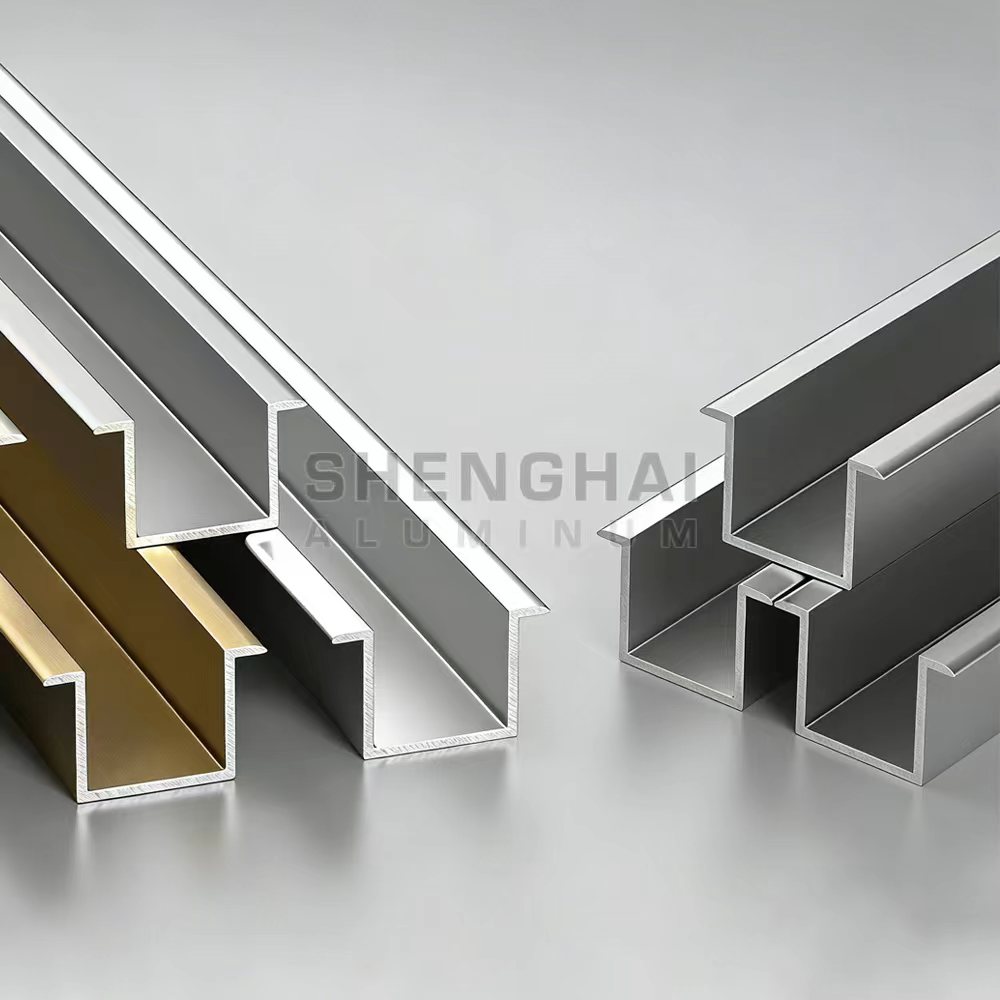
The brushed finish is a mechanical surface treatment process that creates a pattern of fine, parallel lines on the aluminum surface. While it may not offer the extensive color variety of powder coating, it offers distinct advantages in tactile and visual texture. Aluminum trim strips with a brushed finish feature a surface characterized by uniform, fine lines, creating a visually layered effect that is both sophisticated and enduringly appealing.
Furthermore, this texture offers a practical advantage: it effectively conceals minor scratches, making it a highly robust choice for areas subject to frequent use.
The brushing process is typically combined with anodizing to achieve a synergistic blend of aesthetic appeal and durability. This finish is commonly found in high-end furniture, commercial spaces, and modern-style designs.
Polished Finish: A Choice Emphasizing Visual Impact
A polished finish gives the aluminum surface a near-mirror-like appearance, delivering exceptional reflectivity and strong visual impact.
This technique is typically reserved for projects where decorative flair is paramount—such as display spaces, accent features, or high-end design environments.
However, it is important to note that polished surfaces are more susceptible to fingerprints and scratches; consequently, they require greater maintenance in practical use and are generally less suitable for high-traffic or frequently touched areas.
How to Select the Right Finish Based on Specific Needs
When sourcing aluminum edge trim, there is no single universal best finish; the key lies in evaluating the specific application context.
For outdoor or humid environments, prioritize anodizing or high-weather-resistance powder coating to ensure long-term durability and trouble-free performance.
If the project is cost-sensitive yet requires a consistent color scheme, powder coating is likely the most suitable choice.
For home renovation projects, particularly those leaning toward a natural aesthetic, wood-grain transfer printing is an excellent option.
If you are aiming for a modern minimalist or industrial design aesthetic, a brushed finish will best complement the overall visual theme.
For purely decorative accents where visual impact is the primary goal, a polished finish may be appropriate, provided the usage environment is carefully considered.
For decorative aluminum trim, surface finishing is not merely an optional add-on; it is a critical stage that determines the final product’s quality.
Selecting the right finish not only enhances the product’s durability but also elevates the overall quality and completeness of the entire project. Conversely, even if the base material is flawless, an inappropriate surface finish can compromise the final aesthetic outcome.
If you are involved in long-term procurement or project supply, it is highly recommended that you clearly define the intended usage environment, budget, and client requirements during the initial planning stages. Subsequently, consult a professional manufacturer to identify and match the most suitable surface-finishing solution.
This proactive approach not only minimizes potential issues down the line but also genuinely boosts product competitiveness and client satisfaction.